

Q1 2026 Outbound Sales Report: What We Learned From 100+ B2B Sales Teams
Here’s what actually worked in Q1 and what you should stop doing before Q2. Q1 always looks busy. More calls.More emails.More tools. But when we reviewed over 100 B2B sales teams, one pattern stood out: Activity went up. Results did not. That gap tells you everything. What Actually Worked in Q1 1. Fewer Leads. Better Conversations. The teams that performed best did less. Not less effort.Less waste. They focused on: Their pipelines looked smaller.Their close rates told a different story. If you want a practical breakdown, see how we approach qualified lead generation and appointment setting on our services page:👉 https://momentum-outbound.com/services 2. Timing Beat Personalisation Everyone is still talking about personalisation. But in Q1, timing won. A simple message sent at the right moment outperformed a perfect message sent too early. The best teams knew: They did not guess.They worked with signals. 3. Qualification Moved Upstream Top teams stopped qualifying on calls. They qualified before the meeting. That meant: So when the call started, it moved forward. Not sideways. If you want to see how this works step by step, here’s a simple breakdown:👉 https://momentum-outbound.com/how-it-works What You Should Stop Doing Before Q2 1. Stop Measuring Activity as Progress More emails does not mean more pipeline. More calls does not mean more revenue. If your team is busy but your numbers are flat,you do not have a volume problem. You have a qualification problem. 2. Stop Sending Reps Into Unqualified Calls This is where most teams lose time. The call starts.The rep asks basic questions.The deal weakens in real time. By the end, everyone knows it was not a real opportunity. That should never happen. 3. Stop Treating All Leads the Same Not every lead deserves attention now. Some are early.Some are not relevant.Some are simply not a fit. The best teams segment by: Everything else is noise. The One Shift That Changes Everything Across all 100+ teams, one shift made the difference: They moved from generating leads to qualifying opportunities. That sounds small. It is not. It changes: If you want a deeper industry breakdown, this guide is worth reading:👉 https://momentum-outbound.com/blog/qualified-leads-by-industry Final Thought Q1 proved something simple. Outbound does not fail because people are not trying.It fails because the wrong conversations are happening. Fix that, and everything else improves. One Line to Take Into Q2 If your pipeline needs to be qualified during the call, it was not built properly. External References For broader context on B2B buying behaviour and why timing matters, see:
The Energy Broker’s Playbook: How to Build a Renewal-Ready Pipeline in 2026
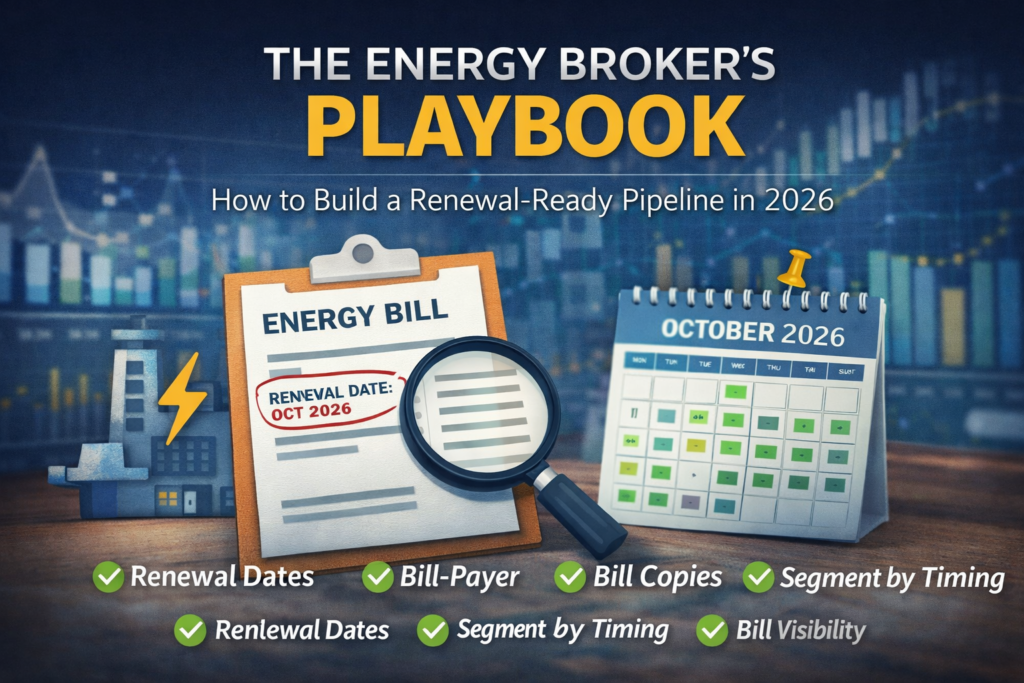
If you don’t know renewal dates, you don’t have a pipeline. You have activity.You have conversations.ou may even have interest. But you don’t have control. And in energy brokerage, control comes down to one thing:timing. Why Most Energy Pipelines Feel Busy — But Don’t Convert On paper, everything looks fine. Yet deals stall. Not because the offer is wrong.Not because the pricing is off. But because the timing was never there. The contract isn’t up.The business isn’t reviewing.The decision-maker isn’t engaged. So the pipeline fills with conversations that were never going to close. What a Real Pipeline Looks Like in Energy A real pipeline in energy is not built on volume. It is built on renewal visibility. Every opportunity should answer four questions before a rep gets on a call: If those are unclear, the opportunity is not real yet. The Four Pillars of a Renewal-Ready Pipeline 1. Renewal Windows Come First Everything starts with the renewal date. Without it: With it: A pipeline without renewal data is not a pipeline.It is a list. 2. Identify the Bill-Payer Early Energy decisions are not always made by the loudest person on the call. They are made by the bill-payer. That could be: If your team is speaking to someone who cannot approve the switch,the deal is already delayed. Qualification here is simple: If they can’t sign, they can’t progress. 3. Secure the Bill Before You Quote The bill is not optional. It is the foundation of: Without a bill: With a bill: 4. Segment by Timing, Not Just Industry Most pipelines are segmented by: But in energy, the most important segment is: When they are ready to act. You should clearly separate: This allows: Not every lead needs attention now.But every lead needs timing clarity. Where Most Brokers Lose Momentum The breakdown usually happens here: The result? Sales teams spend time: And over time, that erodes performance. What Changes When You Get This Right When your pipeline is built around renewal readiness: Your team stops chasing. They start progressing. Final Thought In energy brokerage, timing is not a detail. It is the system. If you don’t know: You are not building a pipeline. You are building noise. One Line to Take With You A real energy pipeline is not built on leads. It is built on renewal timing, decision access, and bill visibility.
The Anatomy of a Qualified Lead: What Your Sales Team Actually Needs (By Industry)

If your reps still ask “who signs this?” during a call, your leads are not qualified. This is where most pipelines break. Not at the close.Not during the pitch.But at the very start. A qualified lead is not just someone who answers the phone.It is someone your sales team can move forward with. What a Qualified Lead Really Means A qualified lead should meet four basic conditions: If these are missing, the lead is not qualified. It is simply activity. Why Most Leads Fail Before the Call Many leads fail for the same reasons: As a result, your sales team does extra work during the call.They ask basic questions.They try to create urgency.They attempt to fix gaps in information. However, this is not selling.It is recovery work. What a Qualified Lead Looks Like in Energy In energy, qualification depends on timing and access. A strong lead includes: Without this, your team is quoting without clarity. What a Qualified Lead Looks Like in Telecom In telecom and VoIP, timing and ownership are critical. A qualified lead includes: Without urgency, conversations stall. What a Qualified Lead Looks Like in MSP & IT In MSP and IT services, qualification is driven by need and fit. A strong lead includes: Otherwise, the conversation remains informal. What a Qualified Lead Looks Like in Merchant Services In payments, qualification is based on volume and dissatisfaction. A qualified lead includes: Without this, it becomes a pricing discussion with no direction. The Common Pattern Across all industries, three factors define a qualified lead: If one is missing, the opportunity weakens. What Your Sales Team Actually Needs Your sales team does not need more leads. They need: When this happens, performance improves naturally. Sales becomes more focused.Results become more consistent. Final Thought A qualified lead is not about volume.It is about progression. If your team is still asking: Then the qualification is happening too late. One Key Takeaway If a lead needs to be qualified during the call, it was not qualified properly.
The Hidden Cost of Bad Leads: How Unqualified Pipeline Drains Your Team

Your BDR just spent 90 minutes on a discovery call. The prospect seemed engaged. They asked good questions. They said they’d “circle back next week.” But three follow-ups later, you realise the truth: they were never going to buy. Wrong budget. Wrong authority. Wrong timing. Wrong everything. That wasn’t just a lost opportunity. That was £187 in wasted salary, 90 minutes your team will never get back, and one more chip taken out of your BDR’s confidence. Bad leads aren’t harmless. They don’t just “not convert.” They actively drain your business—stealing time, destroying morale, and bleeding revenue in ways most sales leaders never calculate. Here’s what unqualified pipeline is actually costing you. Table of Contents What Makes a Lead “Bad”? A bad lead isn’t someone who said no. It’s someone who was never qualified to say yes. Here’s what that looks like in practice: Wrong contact: You’re speaking to someone who can’t approve, sign, or influence the decision. An office manager when you need the owner. A junior IT technician when you need the IT Director. Wrong timing: Their contract doesn’t expire for 18 months. They renewed last week. They’re mid-implementation with a competitor. There’s no active buying window. Wrong context: You don’t know their current setup, contract terms, or pain points. You’re guessing what they need instead of qualifying what they have. Wrong fit: They’re outside your ICP. Too small, too large, wrong sector, wrong geography. You can’t serve them well even if they buy. These aren’t edge cases. For most sales teams, 40–60% of pipeline falls into at least one of these categories. And every single one of them is costing you more than you think. The Real Cost: Breaking Down the Numbers Let’s assume your BDR earns £35,000 per year. That’s roughly £17 per hour (assuming 2,080 working hours annually). Here’s what one bad lead costs: Initial research and list building: 15 minutes = £4.25First outreach attempt (email/call prep): 10 minutes = £2.83Follow-up attempts (3–5 touches): 30 minutes = £8.50Discovery call (if you get that far): 60–90 minutes = £17–£25.50Internal follow-up and CRM admin: 20 minutes = £5.67Manager review time: 15 minutes = £7.50 (at £30/hour) Total cost per bad lead that reaches discovery: £45.75–£53.75 Now multiply that by 20 bad leads per month. That’s £915–£1,075 in wasted salary every single month. Over a year, that’s £10,980–£12,900 going directly into a black hole. And that’s just one BDR. If you’re running a team of five, you’re looking at £54,900–£64,500 annually in wasted payroll alone. But the salary cost is actually the smallest part of the damage. Time Theft: The Invisible Drain Bad leads don’t just waste time. They steal opportunity cost. Every hour your BDR spends chasing an unqualified prospect is an hour they’re not spending on a real opportunity. That’s the hidden multiplier most sales leaders miss. Your BDR has 160 working hours per month. If 40% of their pipeline is unqualified, they’re spending 64 hours per month on leads that will never close. That’s 1.6 full working weeks every single month producing zero revenue. Now consider what they could be doing with that time: The opportunity cost isn’t just the wasted time. It’s the revenue you didn’t generate because your team was busy with the wrong people. The Morale Tax: When Your Team Stops Believing This is where bad leads do their most insidious damage. When your BDR spends two weeks nurturing a “hot lead” only to discover the prospect has no budget, no authority, and no intent, something breaks. Not immediately. But gradually. They start to distrust the pipeline. They stop believing their own qualification. They become cynical about every conversation. And worst of all, they start cutting corners because “it probably won’t close anyway.” The morale tax compounds over time: One MSP owner told us his best BDR quit after six months because “I’m tired of being set up to fail.” The pipeline looked healthy on paper. But 70% of it was garbage, and the rep knew it before management did. You can’t measure morale in a spreadsheet. But you can see it in turnover rates, sick days, and the quality of conversations your team is having. Bad leads don’t just waste time. They erode belief. Revenue Impact: Beyond the Lost Deal Sales leaders often think about bad leads in terms of “deals we didn’t close.” But the revenue impact is much larger than that. Here’s what bad pipeline actually costs: 1. Forecasting failure: Your board thinks you’ve got £400K in pipeline. But £240K of it is junk. So you miss targets, lose credibility, and make poor hiring or investment decisions based on phantom revenue. 2. Delayed good leads: Real opportunities sit in the queue while your team chases dead ends. By the time you circle back, they’ve already signed with a competitor. 3. Reputation damage: Every bad-fit conversation you force burns a potential relationship. That procurement manager you cold-called six months too early? They remember. And they’re not taking your call when the timing is actually right. 4. Higher CAC: If 50% of your pipeline is unqualified, your actual cost per acquisition is double what you think it is. You’re spending twice as much to close half as many deals. 5. Weaker negotiating position: When your team is desperate to hit quota and the pipeline is thin (because most of it is rubbish), you discount harder, accept worse terms, and give away margin you shouldn’t. Bad leads don’t just fail to generate revenue. They actively sabotage the revenue you could have generated. How Bad Leads Enter Your Pipeline Most unqualified leads come from one of five sources: 1. Bought lists: Generic databases with outdated contacts, wrong job titles, and zero intent signals. You’re calling people who’ve never heard of you and don’t care. 2. Inbound with no qualification: Someone downloaded a whitepaper or filled a form. But that doesn’t mean they’re ready to buy, have budget, or hold authority. Your team assumes interest = intent. 3. Loose lead scoring: Your CRM
The Panic Moment Playbook: How Top Teams Close 3x More by Targeting Triggers

Your sales team just spent three weeks chasing a lead that went nowhere. Meanwhile, a competitor closed a deal in six days with the same prospect—because they knew something you didn’t. The prospect’s telecom provider had just suffered a major outage. Their contract was up for renewal in 47 days. And the IT Director was already looking for alternatives. That’s not luck. That’s trigger-based outbound. Most outbound teams are still selling into random lists, hoping someone happens to be ready. But the best teams have stopped guessing. They’ve built their entire approach around “panic moments”—the specific events that make prospects suddenly ready to act. And they’re closing three times more deals because of it. This isn’t about better scripts or more follow-ups. It’s about knowing exactly when to show up. Table of Contents What Is a Panic Moment? A panic moment is a specific event that disrupts the status quo and forces someone to reconsider their current setup. It’s not about creating fear. It’s about recognising when the market has already created urgency. For an energy broker, it’s when a client’s supplier announces a 40% rate increase. For an MSP, it’s when a prospect’s current provider misses three SLA commitments in a row. For a merchant services provider, it’s when a restaurant chain opens five new locations and realises their EPOS system can’t scale. These moments open buying windows that didn’t exist 48 hours earlier. Why Random Lists Kill Conversion Here’s what happens when you target random lists: You’re calling companies who aren’t actively evaluating alternatives. Their current provider is “fine enough.” There’s no budget conversation happening. No one’s been asked to run a comparison. The decision-maker isn’t even thinking about your category. So your perfectly crafted message gets ignored—not because it’s bad, but because the timing is wrong. Most sales leaders respond to this by cranking up volume. More dials. More emails. More “touches.” But activity without context just creates noise. You end up burning through lists, exhausting your team, and wondering why reply rates keep dropping. The invisible problem isn’t effort. It’s misalignment with market readiness. The Psychology Behind Trigger-Based Selling Trigger-based outbound works because it taps into four behavioural realities: Loss aversion: People react more strongly to potential losses than equivalent gains. A rate hike, outage, or compliance deadline creates perceived loss—which drives action faster than any promise of improvement. Status quo bias: Most buyers won’t switch unless something forces them to reconsider. Triggers break the inertia. Salience: When a trigger event happens, your solution category suddenly becomes top-of-mind. You’re not interrupting—you’re arriving exactly when they’re already thinking about the problem. Urgency without pressure: Real urgency (contract ending, rates increasing, system failing) is external. You’re not manufacturing it. You’re simply responding to it with a timely solution. This is why trigger-based messages get 3–5x higher reply rates than generic cold outreach. You’re not convincing someone they have a problem. You’re showing up when the problem has already convinced them. The Panic Moment Framework (5 Steps) Here’s how top teams build trigger-based outbound systems: Step 1: Map Your Vertical’s Trigger Events List the specific events that make your prospects reconsider their current setup. Be concrete. “Budget concerns” is too vague. “Supplier announces 35% price increase with 60-day notice” is a trigger. Step 2: Build Signal Sources Identify where these triggers surface: industry news, LinkedIn job changes, company announcements, compliance deadlines, provider outages, contract databases, public filings. Step 3: Create Qualification Overlays Not every trigger is worth pursuing. Layer in: decision-maker access, contract position, company fit, and timing window. A trigger without authority access is just noise. Step 4: Design Trigger-Specific Messaging Generic templates don’t work here. Each trigger needs its own angle. Reference the specific event. Show you understand the implication. Offer a clear next step. Step 5: Track and Refine Monitor which triggers convert, which fizzle, and why. Double down on what works. Cut what doesn’t. This isn’t a one-time exercise. It’s a system. Trigger Library by Vertical Different industries have different panic moments. Here’s what matters in each: Energy Brokers Telecom / VoIP MSP / IT Services Merchant Services / EPOS How to Find Triggers Ethically You don’t need to be creepy to spot triggers. Here’s how to do it properly: Use Public Data Sources: Build First-Party Intelligence: Use Technology Wisely: The key is to be helpful, not intrusive. If you’re using information that’s publicly available and relevant to solving their problem, you’re fine. What “Qualified” Actually Means at Trigger Moments A trigger without proper qualification is just interesting information. Here’s what you need: Trigger What It Means Who to Speak To What to Collect Rate increase Budget pressure, reconsideration window Procurement, Finance Director Current rates, contract end date, consumption data Provider outage Trust broken, switching consideration IT Director, Operations Director Current provider, contract terms, technical requirements New location Immediate need, buying window open Owner, Operations Manager Rollout timeline, existing setup, volume projections Contract renewal (60 days) Active evaluation phase Decision-maker (varies by vertical) Current terms, renewal date, decision timeline Don’t move forward without: A trigger conversation with the wrong person is still a wasted conversation. Common Mistakes (And How to Fix Them) Mistake 1: Treating Every Trigger the Same Fix: Build trigger-specific messaging. A rate increase needs a different approach than an outage. Mistake 2: Jumping Straight to Pitching Fix: Lead with context. Reference the trigger. Ask about impact. Qualify before you sell. Mistake 3: Ignoring Timing Windows Fix: Map when each trigger creates urgency. A contract renewal 6 months out isn’t panic. 60 days out is. Mistake 4: Over-Relying on Automation Fix: Use automation to surface triggers, but personalise your outreach. Generic templates kill trust. Mistake 5: Forgetting to Qualify Authority Fix: Always confirm: who makes the final decision? If you’re not talking to them (or someone who can connect you), move on. Myth vs Reality Myth: Trigger-based selling is just opportunistic. Reality: It’s strategic timing. You’re solving problems when they’re most acute. Myth: You need expensive tools to find triggers. Reality: Public
Why Your ‘Hot Leads’ Are Ice Cold: The Hidden Data Gap Killing Sales Teams
Your SDR just marked another lead as “hot.” They had a great conversation. The prospect seemed interested. Everything feels right. But three weeks later, that lead has gone dark and your pipeline forecast is falling apart again. Sound familiar? Here’s the uncomfortable truth: Most “hot leads” aren’t actually hot. They’re warm at best, and ice cold at worst. The problem isn’t your sales team’s instincts or effort. It’s the invisible data gap that’s quietly killing conversions across the sales floor. The Data Gap Your CRM Won’t Tell You About When sales teams call a lead “hot,” they’re usually relying on surface-level signals: engagement scores, job titles, company size, maybe a form fill or a demo request. But these vanity metrics miss the three pieces of intelligence that actually matter: 1. Contract Renewal Date If you don’t know when their current solution expires, you’re flying blind. Reaching out 8 months before renewal? You’re too early. Two weeks after they renewed? You’re 12 months too late. 2. Current Contract Terms Without understanding their existing commitments, pricing models, or pain points with their current vendor, you can’t position value properly. You’re guessing instead of selling. 3. True Decision-Maker Access Talking to an “influencer” who doesn’t control budget or signing authority isn’t a hot lead—it’s a time sink. If you haven’t mapped the decision-making unit, you don’t have a qualified opportunity. The brutal reality: If you’re missing any of these three data points, that lead isn’t hot. It’s hypothetical. Why This Gap Exists (And Why It’s Getting Worse) Most sales teams are stuck playing a volume game. More dials. More emails. More “touches.” The assumption is that activity equals pipeline. But activity without intelligence just creates noise. You end up: Meanwhile, your competitors using signal-led outbound are targeting the exact 5% of accounts showing real buying intent, with the context needed to close them. The Signal-Led Alternative: Outbound With Intelligence Forward-thinking sales teams aren’t abandoning outbound. They’re rebuilding it on a foundation of live buyer signals and real data. Instead of treating every account the same, they focus exclusively on prospects showing tangible signs of readiness: These aren’t “maybe interested someday” signals. They’re “ready to buy now” triggers and when combined with decision-maker mapping and contract intel, they transform pipeline quality overnight. What Actually Makes a Lead Hot A genuinely hot lead checks all these boxes: ✅ Timing is right – They’re in an active buying window✅ Context is clear – You know their current setup and pain points✅ Access is secured – You’re talking to someone who can say yes✅ Intent is validated – They’re showing behavioral signals of readiness Without all four? You’re building pipeline on hope, not data. How to Close Your Data Gap If you’re tired of watching “hot” leads go cold, here’s where to start: The best sales teams have stopped confusing activity with progress. They’ve shifted from high-volume, low-context outreach to precision targeting backed by live market intelligence. The Bottom Line Your leads aren’t hot because your CRM says so. They’re hot when timing, context, and access align and you have the data to prove it. Everything else is just guessing. If you’re ready to build an outbound engine that targets the 5% of accounts actually ready to buy, with the intelligence needed to close them, it’s time to stop chasing every lead and start catching the right ones. Want to see what signal-led outbound looks like in action? Discover how Our Lead Generation and Appointment Setting combines AI-enabled BDRs with live buyer signals to create forecastable pipeline. Learn more about Momentum Outbound →
The Q1 Sales Trap: Why 73% of B2B Teams Miss Their First Quarter Target

Lead generation is the number one obsession for B2B sales leaders going into Q1. Every January starts the same way for B2B sales teams. Targets reset. Forecasts look thin. Leadership wants confidence.And suddenly, Q1 feels like a race you’re already losing. The natural reaction?More leads. More activity. More pressure. But this is where most teams fall into what we call the Q1 sales trap and it’s why 73% of B2B teams miss their first-quarter target. The uncomfortable truth is this: The problem isn’t that you don’t have enough leads.The problem is that the leads you’re chasing were never going to convert. This is especially true in high-outbound industries like energy brokers, telecoms/VoIP, MSPs, and merchant services, where bad data and wrong contacts quietly kill deals before they ever had a chance. Why Q1 Feels Harder Than Every Other Quarter Q1 triggers a very specific psychological response: loss aversion. When pipeline looks light early, sales teams don’t feel neutral — they feel behind.And when people feel behind, they stop being selective. Instead of asking: Teams ask: This leads to: By the time February arrives, teams are busy but stuck. The Real Reason 73% of B2B Teams Miss Q1 It’s not effort.It’s not motivation.And it’s rarely the quality of the salespeople. Q1 targets are missed because lead generation breaks down in three predictable ways. 1. Bad Data Masquerading as Opportunity Most B2B sales teams are still working from: In Q1, this is lethal. Energy brokers chase accounts with no renewal visibility.Merchant services teams quote without knowing transaction volume.MSPs start discovery calls with no understanding of the current IT setup. The lead exists — but the opportunity never did. 2. Wrong Contacts, Right Too Late One of the biggest Q1 killers is speaking to people who can’t sign anything. Examples: By the time the real decision-maker is identified, momentum is gone — or the timing window has closed. This is why so many teams feel like they’re “having good conversations” but closing nothing. 3. Qualification Happens Too Late In many B2B sales environments, qualification is still treated as something that happens after a meeting is booked. That’s backwards. When renewal dates, contract status, volumes, or technical requirements aren’t known upfront, sales calls become discovery-heavy, slow, and fragile. Q1 doesn’t reward slow. How the Q1 Sales Trap Shows Up by Industry While the root problem is the same, it shows up differently depending on how each industry buys. Energy brokers struggle when renewal windows and bill-payer authority aren’t confirmed early.Telecoms and VoIP providers waste weeks re-quoting because contract dates or connectivity details weren’t gathered upfront.Merchant services teams lose deals when pricing is built without real volume context.MSPs drown in discovery calls that never progress because technical and commercial detail was missing from the start. Different industries. Same outcome:Q1 activity without Q1 progress. Why “More Leads” Makes the Problem Worse When Q1 pressure hits, many teams double down on volume: But volume doesn’t fix broken qualification. It amplifies it. You don’t get better results by feeding your sales team more uncertainty.You get better results by feeding them clarity. That’s the shift high-performing teams make early in Q1:from chasing conversations → to securing qualified opportunities. What Actually Works in Q1 Lead Generation Winning teams approach B2B lead generation differently in Q1. They focus on: This changes everything. Sales conversations start informed.Objections surface earlier.Forecasts become believable again. And most importantly, Q1 stops feeling reactive. Turning Q1 From Panic to Control The teams that hit Q1 targets don’t work harder — they work cleaner. They stop accepting leads that require guesswork.They stop confusing activity with progress.And they stop discovering basic information after a call is booked. Instead, they build lead generation systems that do the hard work upfront — so sales can focus on closing, not filtering. That’s the real lesson of the Q1 sales trap. If your team is feeling pressure early in the quarter, it’s not a signal to speed up.It’s a signal to tighten qualification, improve data quality, and speak to the right people first. Q1 isn’t lost because of January.It’s lost because of what happens before the first conversation. If you’re searching for lead generation services in London, Cambridge, or across the UK, the goal isn’t more leads — it’s better ones. Because in Q1, clarity beats volume every time.
End-of-Year Lead Generation & Appointment Setting Playbook: Prep Now to Dominate Q1 for MSPs, Telcos, and Utilities

As the year winds down, it’s easy to get caught up in the chaos: wrapping up final quarterly targets, approving holiday time off, and checking off the last of your annual to-do list. For MSP, telco, and utility sales leaders across the UK, especially those focused on lead generation in London and lead generation in Cambridge, it’s tempting to put planning on the back burner until January. But here’s the honest truth: the businesses that hit the ground running in Q1 are the ones that use these final weeks strategically. Decision-makers in London’s enterprise districts, Cambridge’s tech hubs, and beyond will return from the holidays with fresh budgets, new priorities, and a willingness to evaluate new solutions. If you wait until January to start your lead generation and appointment setting efforts, you’ll already be playing catch-up. This playbook is designed to be realistic, sincere, and actionable. We’ll cover what you should wrap up before the year ends, and what to prioritize now to ensure your team is booking high-value appointments from day one of Q1. What to Wrap Up Before the Calendar Flips Let’s start with the housekeeping. These tasks will clear the way for a smooth start to the new year, without adding unnecessary stress to your already busy team. 1. Conduct a Final Lead Generation Performance Audit Before you close the book on the year, take a deep dive into what worked (and what didn’t) for your lead generation and appointment setting efforts. Pay special attention to regional performance to refine your strategy for next year: Be honest with yourself here: if a campaign or channel consistently underperformed, there’s no need to carry it into Q1. Reallocate that budget to the tactics that proved they can deliver results. 2. Clean Up Your Lead Database (It’s More Important Than You Think) There’s no bigger waste of your BDR team’s time than reaching out to outdated, incorrect, or unqualified leads. For successful appointment setting—especially in competitive markets like London and Cambridge—having a clean, up-to-date lead database is non-negotiable. Use these final weeks to: 3. Tie Up Loose Ends With Warm Prospects Most decision-makers will check out entirely by mid-December, so now is the time to follow up with warm leads before they go on holiday. Instead of pushing for an immediate appointment, be transparent and offer to schedule a time in early January. For example: “I know you’re wrapping up the year and preparing for time off, so I didn’t want to pressure you now. But I’d love to book a 15-minute call in the first week of January to share how we helped a similar [MSP/telco/utility] business cut their customer acquisition costs. Would that work for you?” This simple, sincere approach will keep the conversation alive and ensure you’re first on their agenda when they return to the office. 4. Debrief Your Appointment Setting Team Your BDRs are on the front lines of your lead generation efforts, and they have invaluable insights that can shape your Q1 strategy. Schedule a low-pressure debrief to ask: This is also a chance to acknowledge their hard work over the past year. Burnout is real during the holiday season, and showing your team you value their feedback will help them return refreshed and ready to perform in January. What to Prepare Now to Dominate Q1 Once you’ve wrapped up the year’s loose ends, shift your focus to laying the groundwork for a strong start to the new year. These tasks will ensure your lead generation and appointment setting efforts are live the moment your team returns to work. 1. Build a Q1 Lead Generation Roadmap Tailored to Your Regions London and Cambridge have unique business landscapes, and your lead generation strategy should reflect that: Map out your target industries, regions, and KPIs now, so your team doesn’t waste time figuring out priorities in January. 2. Pre-Load Appointment Setting Outreach Sequences With team members taking staggered holiday time off, you don’t want your lead generation efforts to go silent. Use your outreach tool to pre-load personalized email sequences, LinkedIn messages, and call reminders for the first two weeks of Q1. For example, you can schedule a first touch email to go out on January 2nd that reads: “Happy New Year! I hope you had a great break. As you start planning your priorities for 2024, many [MSP/telco/utility] leaders like you are focused on [specific pain point]. I’d love to share how we helped a business in [London/Cambridge] achieve [specific result] last year. Would you have 15 minutes this week to chat?” Being the first to reach out to prospects in the new year is a huge competitive advantage, especially in crowded markets like London. 3. Secure Targeted Lead Lists for High-Priority Regions Invest in fresh, verified lead lists now for lead generation in London and lead generation in Cambridge. Focus on decision-makers who are most likely to evaluate new solutions in Q1, such as: Having these lists ready to go on day one of Q1 means your BDRs can start outreach immediately, without waiting for data to be sourced or verified. 4. Test One New Appointment Setting Tactic Don’t wait until Q1 to experiment with a new lead generation strategy. Use these final weeks to test a small, low-risk tactic with a segment of your audience. For example: By testing now, you’ll have data to refine the tactic before rolling it out to your full list in Q1. A Sincere Note for Sales Leaders It’s easy to fall into the trap of pushing your team to squeeze every last lead and appointment out of the final weeks of the year. But burning out your BDRs now will only hurt your Q1 performance. Be realistic about what your team can achieve in December. Prioritize strategic planning over last-ditch outreach, and encourage your team to take their full holiday time off. A rested, focused team will deliver better lead generation and appointment setting results in Q1 than a burnt-out one grinding through the holidays. Get
The Appointment-Setting Ceiling: Why MSPs & Telcos Hit 60% Capacity Then Stall

If you lead sales in an MSP or Telco business, you probably know a strange feeling: everything appears to be working, and yet growth refuses to move. The numbers look healthy at a glance — your team is booking appointments, your show rates aren’t collapsing, your recurring revenue is steady, your churn is tolerable — but the organisation stalls at roughly the same plateau every quarter. You never truly break through. This is the appointment-setting ceiling, and it quietly traps MSP and Telco sales operations at roughly 60% of the appointment-setting capacity they could actually sustain. Strangely, the ceiling rarely presents itself as a dramatic decline; it masquerades as consistency. Things don’t look bad — they just stop accelerating. That is why it is misdiagnosed. Most leaders blame a lack of leads, an anemic pipeline, or insufficient BDR headcount. Many respond by adding another SDR, buying another list, or increasing outreach volume. They throw more activity at the ceiling, and activity produces motion — but not lift. The truth is harsher: most MSP and Telco businesses do not have a lead problem. They have a sales-operations velocity problem. The ceiling isn’t caused by a shortage of prospects. It is caused by structural constraints inside the appointment-setting operation — constraints that cap output long before the market does. Why 60%? The Illusion of “Good Enough” The most dangerous thing about the appointment-setting ceiling is that it hides in plain sight. Many MSP and Telco teams book somewhere between 60 and 90 appointments per month, often from small teams of two to four BDRs. On paper, that feels respectable. If your account executives are closing at 30–40%, those appointments will translate to new business, ongoing revenue, and internal praise. But no one asks the deeper question: Is this the ceiling of possibility — or simply the ceiling of the system? When sales operations analysts tear into the numbers, a common pattern emerges. A team that books 80 appointments a month could, with the same headcount, book 120–140 appointments per month if five silent constraints were removed: None of these are dramatic failures. They are slow leaks — the kind that never produce alarms, but quietly drain output. That is why MSP appointment-setting teams coast at 60%. That is why Telco appointment-setting teams peak and flatten. The ceiling is not enforced by the market. It is enforced by infrastructure. The Quiet Expense of Unqualified Conversations Most MSP sales operations assume that every booked meeting is progress. But look closely at the composition of those bookings and a different picture appears. A significant proportion of meetings in MSP appointment setting are not meetings with buyers — they are meetings with people who happen to respond. When qualification happens after the meeting is scheduled, the BDR function becomes a booking engine rather than a filtering system. The organisation logs meetings as though they were movement, but the account executive is forced into conversations with contacts who lack budget, authority, or immediate use-case maturity. Over time, account executives do the only rational thing: they resist taking meetings. They slow their calendars. They push appointments out. They quietly reject the workload. The business interprets this as market resistance. In reality it is internal resignation. Every MSP that hits this ceiling experiences the same irony: the appointment-setting team believes they need more opportunities, while the account executives quietly want fewer — but better — conversations. Data Decay: The Enemy of Scale Appointment setting in a technical category like managed services or telephony is uniquely dependent on data accuracy. The moment a BDR team moves from working 30–50 accounts to 150–200 accounts, the decay curve begins. Contact records age. Job titles drift. Decision-makers leave. Renewal dates shift. A small team can compensate through memory, familiarity, and repetition — but when an MSP tries to expand its appointment-setting operation, the manual memory system collapses. Telco sales operations suffer an identical fate: the number of account-touch attempts increases, but the percentage of touch attempts that land on viable decision-makers declines. At 60% capacity, that decay does not hurt enough to break confidence. Above 60%, the error margin destroys efficiency. Most organisations misread this decay as a decline in intent. In reality, it is a decline in accuracy. Why Adding More BDRs Makes It Worse Telco and MSP leaders often respond to stagnation by hiring more BDRs. But without restructuring qualification, segmentation, or operational feedback loops, that hire becomes a multiplier of inefficiencies. You add output, but you add no additional intelligence. A fourth or fifth BDR does not raise capacity. It dilutes accountability and explodes administrative load. Instead of 80 mediocre appointments a month, you generate 105 mediocre appointments. The AEs reject more, not fewer. Cycle times elongate. Managerial oversight collapses. The organisation interprets the disappointment as talent mismatch. It is not. It is architectural mismatch. The Operational Path Beyond the Ceiling When MSP appointment-setting teams break the 60% ceiling, they never do it by force. They do it by redesign. They rebuild qualification as a pre-booking filter rather than a post-meeting judgment. They segment accounts with rigor rather than egalitarianism. They introduce coordinated sequencing across email, phone, and LinkedIn so that visibility compounds rather than evaporates. Most importantly, they create a feedback loop between AEs and BDRs — not cosmetic feedback, but structural feedback that tracks what closed, why it closed, and what profile produced it. When that loop runs weekly instead of annually, BDR activity begins to reflect reality rather than assumption. Breaking the appointment-setting ceiling is not dramatic. It is procedural. It is the shift from sales activity to sales operations. The Revenue Cost of Doing Nothing The ceiling has a price. Once an MSP or Telco business plateaus at 60%, it effectively caps its annual revenue expansion by six figures without ever recognising the drag. A team sitting at 80 appointments a month, closing four to five new accounts at a £2,500–£3,500 monthly contract value, will generate roughly £150,000–£175,000 in annual recurring revenue from new business.
7 Ways to Make Outbound Sales Feel Less Like Selling and More Like Helping (And Book 3x More Qualified Meetings)

Last quarter, I sat on a call with Jake, a sales director at a mid-sized business telecom provider. He was exhausted. He’d just pulled his team’s weekly call logs: forty-two outbound dials, eleven brief conversations, zero booked meetings. When he asked his reps why the numbers were so low, one of his top SDRs finally cracked under the pressure. “I hate making these calls,” she admitted. “I’m just reading a script that says ‘we can save you money’ to people who don’t even know who I am. It feels like I’m bothering them. I don’t want to be that guy.” Jake didn’t blame her for feeling this way. Just days earlier, he’d received three cold emails from different vendors that were almost carbon copies of each other, generic promises of savings, a misspelling of his own last name, and zero understanding of the fact that his team was neck-deep in troubleshooting recurring VOIP outages. He deleted each message without a second thought. The problem wasn’t that Jake’s team didn’t know how to sell. It was that their outbound felt like selling. Heavy-handed. Uninvited. Out of touch. And no one wants to be sold to, especially busy decision-makers in telecom, energy, and MSPs who are already drowning in fires of their own. The truth is that outbound doesn’t have to feel that way. The best outbound never feels like selling at all. It feels like helping, like someone is offering a hand rather than pushing a product. And here’s the irony that surprises most leaders: When you stop trying so hard to sell, you end up booking three times more qualified meetings. We’ve seen this play out again and again with over seventy B2B teams across telecom, energy, and IT services. The shift is simple but profound: stop pitching; start helping. Below are the seven most effective ways we’ve helped clients completely reorient their outbound approach so that it feels helpful rather than intrusive and in doing so, dramatically increase their results. 1. Start with their problem not your solution One of the quietest killers of outbound performance is the persistent habit of leading with “we.” “We offer low-cost VOIP plans.”“We have the best energy rates.”“We help MSPs scale.” It’s the most common mistake in the book: talking about yourself before proving you understand the person you’re talking to. Your prospects don’t care what you offer until they’re convinced you understand what they’re up against. People buy relief long before they buy features. Jake’s team originally opened every call with a standard pitch: “Hi, I’m Sarah from X Telecom—we offer low-cost VOIP plans for multi-site businesses.” The response rate? Two percent. Prospects disengaged within the first five words. We shifted their opener to: “Hi, I’m Sarah from X Telecom. A lot of telecom directors we’ve been speaking with recently are getting hit with unexpected overage fees on their multi-site data plans. Is that something you’ve run into?” Suddenly their response rate jumped to fourteen percent. The difference was immediate and emotional. The first opener is transactional. The second feels like someone has actually been listening to people like them. It acknowledges their world first, not your product. That’s helping. Actionable Tip: Before writing any outreach, identify three problems your prospects definitely face. Start with those not your solution. 2. Only reach out when you have a specific, timely reason to help Nothing feels more like spam than a message that could be sent to anyone at any time. But timely outreach rooted in a trigger, update, or specific moment feels like a gift. One of our clients in commercial energy used to cold call one hundred businesses a day with the same generic “we can save you money” pitch. Their meeting rate was barely half a percent. We helped them reorganize their outreach to focus solely on businesses whose utility contracts were expiring within ninety days. That one contextual shift changed everything. Their new opener became: “I noticed your commercial electric contract is due for renewal next month. A lot of teams we work with don’t realize their provider will auto-renew them at a much higher rate unless they renegotiate. Want a quick look at what competitors are offering right now?” Their meeting rate jumped to six percent. This is the power of timely relevance. You’re not interrupting, they feel like you’re warning them of something important. Helpful, not pushy. Actionable Tip: Use intent data, contract cycles, hiring signals, tech stack changes, or funding news to trigger outreach only when it matters. 3. Do the work they don’t have time to do There’s a psychological principle that runs deep through all human interaction: reciprocity. When you give something valuable first, without expecting anything back, people naturally want to reciprocate. We had an MSP client whose reps used to open calls with: “What IT issues are you dealing with right now?” Most prospects brushed them off with “nothing urgent at the moment,” and the call died instantly. So we flipped the script. Before reaching out, their reps would send a short email that said: “I noticed your team recently rolled out Microsoft 365. Many teams we support run into licensing overages because they don’t have a way to track inactive users. I have a quick checklist that helps clean that up, happy to send it your way.” Eighty percent of people replied asking for the checklist. Twenty percent booked a call. Why? Because you’re not asking for anything. You’re showing up with something. That’s the difference between pushing and supporting. Actionable Tip: Spend two minutes researching one likely problem they have, and send them something that helps solve it—before ever asking for a meeting. 4. Stop talking about features; talk about their relief Features are intellectual. Relief is emotional. People make decisions emotionally long before they justify them logically. Jake’s reps used to tell prospects that their telecom service had “99.99% uptime.” A technically impressive feature. But it didn’t land. Prospects would say, “Okay,” and the conversation would drift away. So